

Position
- Optimal for vibrant flowering and robust growth in full sun, though it tolerates light dappled shade
- A location providing shelter from strong, persistent winds is advantageous
- Excellent for mixed borders, mass planting, or decorative containers
Hardiness
- Resilient to winter temperatures as low as –20 °C (–4 °F)
- For particularly exposed UK gardens, a light autumn application of mulch over the planting area provides added protection for bulbs
Soil
- Favours fertile, freely draining soil, with loams and sandy loams being particularly suitable
- Improve less-than-ideal soils, especially heavy ones, by incorporating garden compost or sharp grit for superior drainage
- Must avoid consistently waterlogged heavy clay, which is highly detrimental to bulb health
- Highly adaptable across the pH scale, flourishing in acid, neutral, or alkaline soils
- Performs optimally when organic content helps sustain both good soil structure and balanced moisture levels, preventing saturation
- Grab a soil test kit and ensure the perfect conditions for growth
Height
- Established clumps typically produce robust stems reaching 40–50 cm (16–20 in) in height each spring
Seasons of Interest
Additional Notes
- Plant bulbs in autumn, ensuring a depth of 12 cm and spacing of 10 cm, for a significant visual impact
- Allow foliage to completely yellow and wither before cutting back; this essential process enables bulbs to store vital energy for the subsequent year
- Divide and reposition overcrowded clumps every 3–4 years, once the leaves have fully died down, to maintain vigorous flowering
- Deadhead spent blooms to preserve plant tidiness and channel the plant’s energy towards bulb development
- All parts of the plant contain mild toxins; handle bulbs with gloves and ensure they are kept out of reach of children and pets
- Highly suitable for naturalising within grassy areas; where possible, carefully lift and replace turf after flowering to minimise bulb disturbance
Daffodil Pink Pride - A Fresh Take on a Classic Spring Flower
With its gleaming white blooms and a soft apricot-pink cup, Narcissus Pink Pride is a daffodil that brings gentle charm and freshness to spring gardens. This large-cupped daffodil combines the sturdy reliability of traditional varieties with the modern appeal of coral pink tones. Whether planted in borders, pots, or natural drifts across lawns, it never fails to lift the spirit after winter. Its long-lasting blooms, elegant form, and versatile nature make it a true highlight in any garden, offering colour and grace when you need it most.
What Makes Daffodil Pink Pride So Special?
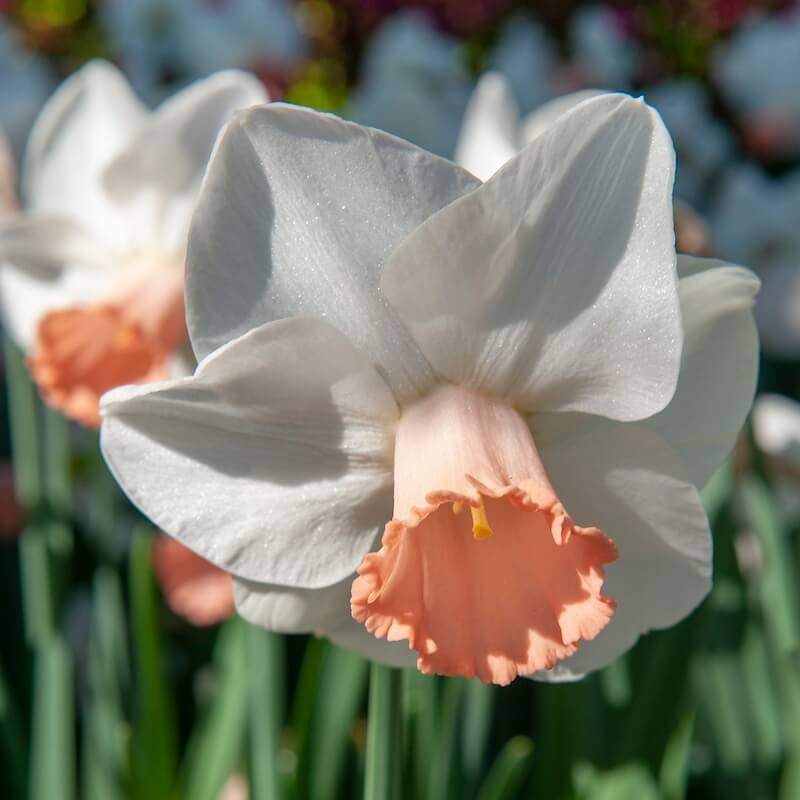
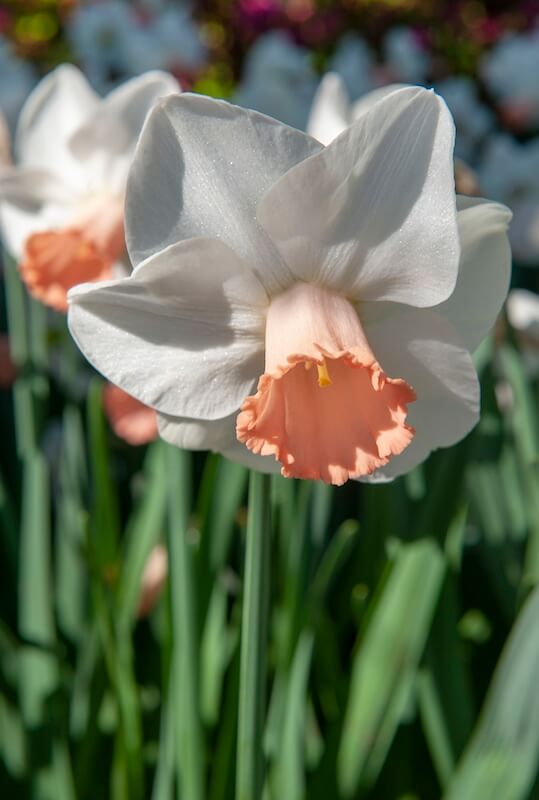
Daffodil Pink Pride is an unusual Narcissus variety admired for its white blooms and apricot-pink cup. The flowers open facing upwards, allowing their soft tones to glow in the spring sunshine. Each flower features pristine white petals and a gently flared trumpet that deepens to a coral pink at the rim, creating a wonderfully eye-catching contrast.
This large-cupped daffodil stands tall on sturdy stems that hold well in breezy weather. It brings structure and height to spring borders and looks striking when planted in generous drifts. Beyond its outdoor charm, Pink Pride also makes an exceptional cut flower, perfect for arrangements that bring the season’s joy indoors.

How to Plant Narcissus Bulbs for a Spectacular Spring Display
To enjoy a dazzling spring display, start by planting your daffodil bulbs in autumn, before the first frosts arrive. Choose a sunny spot with well-drained soil and avoid areas that become waterlogged in winter. Free-draining soil prevents the bulbs from rotting and helps them establish strong roots before the cold sets in.
Dig holes around 10–15cm deep, placing each bulb point-up with at least 8cm between them. Cover gently and water well to settle the soil. When planting in a pot or container, use a peat-free compost mixed with grit for excellent drainage. Bulbs thrive when left undisturbed, so that you can look forward to reliable blooms year after year with minimal effort.
What Conditions Does Daffodil Pink Pride Prefer?
Daffodil Pink Pride loves a sunny position but will also tolerate light shade, making it suitable for many garden settings. It flourishes in well-drained soil enriched with compost or leaf mould. A moist but not soggy soil texture ensures consistent growth and vibrant flowers.
Aim to plant where the bulbs receive several hours of sunlight each day. This helps strengthen the stems and intensify the apricot-pink cup. If you garden in colder areas, choose a sheltered location to protect the blooms from harsh winds and late frosts.
Can Daffodil Pink Pride Grow in Pots and Containers?
Yes, Daffodil Pink Pride is an excellent choice for pots and containers, bringing early-season cheer to patios and doorsteps. Use a deep container with good drainage holes and fill it with a free-draining compost mix. Place the bulbs close together, about 2–3cm apart, for a full and impressive display.
Keep the compost moist but not waterlogged, especially during active growth. Once the flowers fade, allow the foliage to die back naturally before moving the pot aside. This ensures the bulb stores enough energy for next year’s bloom. For an attractive indoor display, place potted bulbs in a cool, bright spot once shoots emerge.
How to Care for Daffodils After Flowering
After your daffodils finish blooming, resist the urge to cut back the foliage too soon. Allow the leaves to turn yellow and wither naturally, as they gather energy for the bulb’s next season. Deadheading spent flowers prevents the plant from using energy on seed production.
If your daffodils are in containers, feed them with a balanced liquid fertiliser every couple of weeks until the foliage dies back. In garden borders, an occasional feed and gentle watering during dry spells are usually enough. Once the leaves have faded completely, you can tidy up and look forward to another glorious spring display.
Why Narcissus Pink Pride Is Perfect for Borders
Few spring flowers add such charm to borders as Narcissus Pink Pride. The large, upward-facing blooms stand proudly above other spring plants, catching the light and creating a soft, cheerful atmosphere. Their gleaming white petals and apricot-pink cups pair beautifully with tulips, hyacinths, and early perennials.
When planted in groups, this daffodil creates a natural effect that feels both structured and relaxed. For the best visual impact, plant in generous drifts or along pathways where the blooms can be appreciated up close. The flower’s sturdy nature ensures it performs beautifully year after year with very little maintenance.
Can You Use Daffodil Pink Pride as a Cut Flower?
Daffodil Pink Pride makes an excellent cut flower for spring arrangements. Its tall stems, lasting freshness, and graceful colour blend make it ideal for vases and bouquets. The salmon pink and white tones bring a sophisticated touch to any setting.
When cutting, choose flowers that are just starting to open. Place them in cool water for a few hours before arranging, as daffodils release a sap that can harm other cut flowers. To create balanced cut flower arrangements, combine them with branches of greenery or early spring blooms such as hellebores and muscari.
How to Combine Pink Pride with Other Garden Plants
Narcissus Pink Pride pairs effortlessly with a wide range of spring plants. Its subtle coral pink cup looks stunning against blue and purple tones, such as forget-me-nots, scillas, or grape hyacinths. For a classic look, combine it with white tulips or early perennials like primroses.
In mixed borders, Pink Pride acts as a bridge between early bulbs and later-blooming perennials. Its fresh colour lifts the mood after winter and blends gracefully as other flowers take over. By grouping it in natural drifts, you can achieve a really natural effect that brightens the entire garden.
Are Daffodil Bulbs Harmful if Eaten?
Like all Narcissus, daffodil bulbs are harmful if eaten. They contain natural compounds that can cause stomach upset and irritation. Always handle bulbs carefully and keep them out of reach of pets and children.
When working with bulbs, it’s best to wear gloves and wash your hands afterwards. Despite this caution, daffodils remain one of the most rewarding and reliable flowers to grow, offering joy each spring with minimal maintenance.
How Long Do Daffodil Bulbs Last in the Garden?
With the proper care, daffodil bulbs can thrive for many years. They naturalise easily in lawns, woodland edges, and borders, returning every spring with renewed strength. Over time, clumps may become crowded, so lifting and dividing every few years helps maintain vigorous growth.
Lift the bulbs after the leaves have entirely died back, separate the offsets, and replant them at the same depth in fresh, well-drained soil. With a bit of attention, your large-cupped daffodil display will continue to reward you season after season.
What Makes the Large-Cupped Daffodil Stand Out?
The large-cupped daffodil, such as Narcissus Pink Pride, offers a perfect balance between classic daffodil shape and striking visual impact. The trumpet, or cup, measures about one-third the length of the petals, creating a balanced, refined look.
The apricot-pink cup adds a modern twist to the traditional yellow daffodil palette, offering a softer, more elegant hue. When combined with gleaming white petals, the effect is both uplifting and timeless—ideal for gardens seeking gentle spring colour.
From Darren’s Patch
Each spring, I look forward to the moment when my daffodil Pink Pride bulbs break through the soil. Their gleaming white blooms and coral pink cups always bring a smile. They light up dull corners and make the whole garden feel alive again.
Over the years, I’ve found that planting them in groups of ten or more gives the most natural effect. I love how they face upwards, almost greeting the day, and how beautifully they complement other bulbs in bloom. For me, these daffodils are a spring essential—reliable, cheerful, and endlessly rewarding.

Key Points to Remember
- Plant in autumn in sunny or lightly shaded spots with well-drained soil
- Choose free-draining compost for pots and containers to avoid rot
- Water after planting and keep the soil moist but not soggy
- Allow foliage to die back naturally after flowering for healthy bulbs next year
- Perfect for borders, pots, and natural drifts for a really natural effect
- Excellent cut flower, ideal for brightening your home
- Keep bulbs away from pets and children as they’re harmful if eaten
- Divide clumps every few years to maintain vigorous growth
- Enjoy gleaming white petals and an apricot-pink cup for an eye-catching spring display
Narcissus Pink Pride is a truly refined choice for anyone seeking a daffodil with elegance and distinction. Its gleaming white petals, apricot-pink cup, and sturdy stems make it an excellent performer in gardens, borders, and containers alike. Perfect for both experienced gardeners and beginners, this large-cupped daffodil promises colour, charm, and a natural effect that brightens every spring garden. Whether planted in drifts or pots, its timeless beauty never fails to impress — a must-have flower bulb for any seasonal display.
Would you like to learn about other bulb varieties? Read about Narcissus Quail here.
For more information on Spring Flowering Bulbs for your garden, please click here.
Frequently Asked Questions
Q: What is Narcissus Pink Pride, and why is it such a popular daffodil?
A: Narcissus Pink Pride is a large-cupped daffodil with gleaming white blooms and an apricot-pink cup that gradually matures to a soft coral pink. This unusual variety stands out in the spring garden with its eye-catching colour contrast and strong, upright stems. Known for its elegance and reliable performance, it’s ideal for borders, drifts, or an attractive indoor display. The flowers face upwards, creating a really natural effect in both formal and cottage-style plantings. It’s a hardy, long-lasting choice for gardeners who want something more refined than the traditional yellow daffodil.
Q: When and how should I plant Narcissus Pink Pride bulbs?
A: Plant Narcissus Pink Pride bulbs in autumn, from September to November, before the first frost. Choose a sunny or lightly shaded spot in well-drained or free-draining soil enriched with organic matter. Place bulbs about 10–15cm deep, with the pointed end facing upwards and spaced roughly 10cm apart. Water them well after planting to help roots establish before winter. In containers, use a quality compost mix with added grit for drainage. Once planted, these daffodil bulbs require minimal attention — just let them naturalise for a stunning spring display year after year.
Q: How should I care for Narcissus Pink Pride plants after they bloom?
A: Once your daffodil Pink Pride flowers have finished blooming, remove the faded blooms but leave the foliage intact. This allows the plant to replenish energy for next year’s flowers. Water lightly if the soil becomes dry and give a balanced feed to encourage bulb strength. Avoid cutting or tying the leaves until they yellow naturally. In containers, continue watering until the foliage completely dies back. Allow bulbs to rest in dry, well-drained soil during summer. With this gentle care, your large-cupped daffodil bulbs will reward you with fresh blooms each spring.
Q: Can I grow Narcissus Pink Pride in pots or containers?
A: Yes, Narcissus Pink Pride grows beautifully in pots and containers. Choose a deep container with good drainage holes and fill it with a mix of loam-based compost and horticultural grit for free-draining soil. Plant bulbs close together but not touching. Keep the compost moist but never waterlogged. Position your container in a sunny or lightly shaded area. The sturdy stems and gleaming white blooms make an excellent choice for patios, entrances, or windowsills. Once they bloom, they also make lovely cut flower arrangements that bring spring colour indoors.
Q: Is Narcissus Pink Pride suitable for borders and garden beds?
A: Absolutely. The daffodil Pink Pride is ideal for mixed borders, garden beds, or naturalised drifts. Its coral pink cup and white petals complement a wide range of spring plants, from tulips to muscari. Plant bulbs in groups of five or more to create a natural effect that softens edges and adds seasonal interest. This large-cupped daffodil also pairs beautifully with early perennials and evergreen shrubs, bringing height, texture, and a pop of colour to your spring garden. Its strong, upright stems help it stand out even in breezy spots.
Q: Can Narcissus Pink Pride be used as a cut flower?
A: Yes, Narcissus Pink Pride is a popular choice for cut flower arrangements thanks to its sturdy stems, sweet scent, and eye-catching apricot-pink cup. Cut flowers in the morning, when blooms are half-open, for longer vase life. Place them in cool water and change it every few days to keep them fresh. They pair well with tulips, hyacinths, or white narcissus varieties in mixed displays. For a sophisticated touch, use these gleaming white blooms to add a soft blush of colour to your spring floral centrepieces.
Q: What type of soil and light conditions do these bulbs prefer?
A: Narcissus Pink Pride thrives in full sun to partial shade and prefers moist but well-drained soil. Avoid waterlogged conditions, as bulbs may rot in standing water. If your soil is heavy clay, mix in grit or organic matter to improve drainage. This large-cupped daffodil also grows well in raised beds or pots filled with free-draining compost. A sunny position helps bring out the best colour in the apricot-pink cup and ensures strong stems for an impressive spring display.
Q: Are Narcissus Pink Pride bulbs harmful if eaten?
A: Yes, like all daffodil bulbs, Narcissus Pink Pride bulbs are harmful if eaten. They contain natural alkaloids that can cause stomach upset in humans and pets. Always wear gloves when handling large quantities of bulbs, and keep them out of reach of children and animals. Once planted in the garden or containers, the risk is minimal. Enjoy their cheerful colour and fragrance without concern by handling them sensibly and safely.
Q: Where can I buy Narcissus Pink Pride bulbs in the UK?
A: Narcissus Pink Pride bulbs are widely available in the UK, both online and at leading garden centres. Look for quality bulbs from reputable suppliers to ensure healthy growth and vibrant flowers. You can find them among spring-flowering bulb collections, often listed under large-cupped daffodils or narcissus varieties. Whether you prefer shopping locally or ordering online, it’s easy to buy top-grade daffodil bulbs that will bring your garden to life next spring.